Today is the last day of World Meat Free Week but hopefully a new start for many people and a step towards helping to save animals and ultimately save the planet. There's no point me preaching to the choir but, if you are a meat-eater, give it a try. It doesn't matter that you missed the designated week - you can start tomorrow!
Something we may all have in common is ... The love of Gin! I have just bottled my first attempt at Elderflower Gin and, let me tell you, it is golden nectar. Not only does it taste delicious, it was sooo easy to make.
You will need:-
1 litre of gin (or vodka)
6 tbsp white sugar
25 elderflower heads (shake out the bugs - this is a vegetarian version)
Peel from 2 lemons
Pour the gin and sugar into a large sterilised jar and swish around
Submerge the flower heads under the liquid
Top with lemon peelings to weigh down the elderflowers
Keep in a cool, dark place and give it a swirl each day
After 1-2 weeks strain the liquid through a mesh or muslin cloth *
Pour into sterilised bottles
*Add more sugar at this stage if you want a liqueur
It can be drunk alone, with tonic water, ice and lemon slices or added to fizz for a cocktail
One glass in and I'm feeling rather mellow.
Total Pageviews
Sunday, 23 June 2019
Sunday, 16 June 2019
Fetes des peres/Father's Day
Fathers Day in the UK and once again we've been blessed by hosting our two elderly fathers - a pair of peres.
Whilst not having large appetites, they both have a sweet tooth and so I decided to make Pear and Almond Friands which are a version of French Financiers.
140g unsalted butter
1tbsp plain flour
125g ground almonds
150g icing sugar
4 large egg whites
1tsp almond extract
1 pear from a tin
4tbsp flaked almonds
1. Melt the butter in a pan and set aside to cool
2. Mix flour, icing sugar and ground almonds together
3. Add the lightly beaten egg whites and almond extract
4. Pour in the cooled butter and mix
5. Chill in fridge for 2-3 hours
6. Divide batter into lightly greased muffin tins
7. Place a few diced pear pieces in the centre & scatter flaked almonds around the edge
8. Bake in preheated oven at 180/gas mark 4 for 20-30 mins until cooked & browned at edges
9. Leave in tin to cool for 10 mins then turn out onto a wire cooling rack
10. Serve slightly warm with double cream
Both dads agreed the pears for a pair of peres were pearfection!
Whilst not having large appetites, they both have a sweet tooth and so I decided to make Pear and Almond Friands which are a version of French Financiers.
140g unsalted butter
1tbsp plain flour
125g ground almonds
150g icing sugar
4 large egg whites
1tsp almond extract
1 pear from a tin
4tbsp flaked almonds
1. Melt the butter in a pan and set aside to cool
2. Mix flour, icing sugar and ground almonds together
3. Add the lightly beaten egg whites and almond extract
4. Pour in the cooled butter and mix
5. Chill in fridge for 2-3 hours
6. Divide batter into lightly greased muffin tins
7. Place a few diced pear pieces in the centre & scatter flaked almonds around the edge
8. Bake in preheated oven at 180/gas mark 4 for 20-30 mins until cooked & browned at edges
9. Leave in tin to cool for 10 mins then turn out onto a wire cooling rack
10. Serve slightly warm with double cream
Both dads agreed the pears for a pair of peres were pearfection!
Sunday, 9 June 2019
Minted
The health benefits of mint have been celebrated throughout history. It is known to improve digestion and prevent nausea, acts as an anti-inflammatory, aids recovery of colds, reduces fever, treats bad breath and improves mental awareness and reduces stress. Mint!
Mint is easy to grow and will spread through your garden so is best grown in a pot and can be submerged in your garden bed. This helps prevent the roots spreading.
There are many kinds of mint and whilst the overriding taste will be mint, some smell of lemon, grapefruit, banana and even chocolate and can be used in many ways.
The summer meal below consists of courgette, pea and mint fritters served with a watermelon, feta and mint salad and minted new potatoes.
A refreshing drink is mint tea where mint leaves are infused in hot water. This can be done from fresh or dried mint as well as purchased peppermint tea bags.
Other drinks include a mint julep consisting of bourbon, crushed ice, sugar and fresh mint. My own favourite is mojito where white rum is substituted for bourbon. Maybe this one should only be consumed after eight!
Mint is easy to grow and will spread through your garden so is best grown in a pot and can be submerged in your garden bed. This helps prevent the roots spreading.
There are many kinds of mint and whilst the overriding taste will be mint, some smell of lemon, grapefruit, banana and even chocolate and can be used in many ways.
The summer meal below consists of courgette, pea and mint fritters served with a watermelon, feta and mint salad and minted new potatoes.
A refreshing drink is mint tea where mint leaves are infused in hot water. This can be done from fresh or dried mint as well as purchased peppermint tea bags.
Other drinks include a mint julep consisting of bourbon, crushed ice, sugar and fresh mint. My own favourite is mojito where white rum is substituted for bourbon. Maybe this one should only be consumed after eight!
Sunday, 2 June 2019
Green Gardening
Finally watching Chelsea Flower Show on catchup, the two standouts for me were how gardening and being in open spaces can help with mental health and, secondly, the importance of growing food sustainably.
Camfed's Giving Girls In Africa A Space To Grow highlighted climate change hardy super-crops which are resilient to pests, diseases and dry spells as well as being fortified with vitamins.
The Montessori Centenary Children's Garden encouraged children to pick flowers, eat edible flowers and herbs, watch pond life and learn about future technology with plants being grown under artificial light.
Gardening Will Save The World by Tom Dixon and IKEA showcased plants with medicinal, health and environmental benefits as well as those growing using hydroponic technology which is a method of growing plants without soil.
Right in the heart of London there is a tunnel 33m below ground where salad leaves and herbs are sown onto a kind of mat and kept in the dark. Once sprouting, they are placed under LED lights. The benefits are that intense flavours are grown in a short space of time. Growing in these circumstances mean there are no insects and the plants are not prone to disease, therefore eliminating the need for pesticides and other harmful chemicals.
It's good to see how diets may be improved in Africa, how our future generation will understand the benefits of looking after the earth and how science and technology may be the way forward in providing food for the planet in the future.
Camfed's Giving Girls In Africa A Space To Grow highlighted climate change hardy super-crops which are resilient to pests, diseases and dry spells as well as being fortified with vitamins.
The Montessori Centenary Children's Garden encouraged children to pick flowers, eat edible flowers and herbs, watch pond life and learn about future technology with plants being grown under artificial light.
Gardening Will Save The World by Tom Dixon and IKEA showcased plants with medicinal, health and environmental benefits as well as those growing using hydroponic technology which is a method of growing plants without soil.
Right in the heart of London there is a tunnel 33m below ground where salad leaves and herbs are sown onto a kind of mat and kept in the dark. Once sprouting, they are placed under LED lights. The benefits are that intense flavours are grown in a short space of time. Growing in these circumstances mean there are no insects and the plants are not prone to disease, therefore eliminating the need for pesticides and other harmful chemicals.
It's good to see how diets may be improved in Africa, how our future generation will understand the benefits of looking after the earth and how science and technology may be the way forward in providing food for the planet in the future.
Sunday, 26 May 2019
Palm Oil
There was a time when all I had to worry about was whether there was a vegetarian option on a menu or at a party. No meat, no fish and, preferably, no Quorn for me thank you very much. How things have changed. Now I need to know if the vegetables are organic, how many miles they've travelled to get to my plate and, what they're cooked in.
My (non-veggie) husband loves fish and chips. Yesterday on the way back from the west coast we stopped at an F+C restaurant. Deciding on a portion of chips with mozzarella sticks I asked the waitress what the chips were cooked in, meaning beef dripping or vegetable oil. I was amazed to hear her say Palm oil. My conscience pricked and I struggled with my demons before giving in to hunger and eating them.
Palm oil is, in fact, in many of the foods we eat, the packaging it comes in and the toiletries and cleaning products we use. It is, indeed, hard to avoid. The reason it is so widely used is that it is far more economical to grow than soybean or coconut trees, using up to ten times less land so I don't imagine it will be banned altogether and many people's livelihood depends on the industry. What we do need to establish is whether it is from a sustainable source or not.
Oil palm trees grow in tropical conditions. Deforestation causes the release of greenhouse gases which then ruin the natural habitat of orangutans and other species. The only sustainable way to grow these trees is to plant them on land which has already been cleared. It's a bit like the green belt vs brown belt land for building. There is a body (RSPO) which has tightened the rules on using only sustainable Palm oil and in 2012 the Government pledged the UK would only use oil from sustainable sources. By 2016 we achieved 75% but there's still a way to go both in the UK and globally.
Tomorrow I shall be emailing the manager of the restaurant to ascertain whether the oil is from a sustainable source. Hopefully so as those chips are laying heavy in my stomach and, on my conscience.
My (non-veggie) husband loves fish and chips. Yesterday on the way back from the west coast we stopped at an F+C restaurant. Deciding on a portion of chips with mozzarella sticks I asked the waitress what the chips were cooked in, meaning beef dripping or vegetable oil. I was amazed to hear her say Palm oil. My conscience pricked and I struggled with my demons before giving in to hunger and eating them.
Palm oil is, in fact, in many of the foods we eat, the packaging it comes in and the toiletries and cleaning products we use. It is, indeed, hard to avoid. The reason it is so widely used is that it is far more economical to grow than soybean or coconut trees, using up to ten times less land so I don't imagine it will be banned altogether and many people's livelihood depends on the industry. What we do need to establish is whether it is from a sustainable source or not.
Oil palm trees grow in tropical conditions. Deforestation causes the release of greenhouse gases which then ruin the natural habitat of orangutans and other species. The only sustainable way to grow these trees is to plant them on land which has already been cleared. It's a bit like the green belt vs brown belt land for building. There is a body (RSPO) which has tightened the rules on using only sustainable Palm oil and in 2012 the Government pledged the UK would only use oil from sustainable sources. By 2016 we achieved 75% but there's still a way to go both in the UK and globally.
Tomorrow I shall be emailing the manager of the restaurant to ascertain whether the oil is from a sustainable source. Hopefully so as those chips are laying heavy in my stomach and, on my conscience.
Monday, 13 May 2019
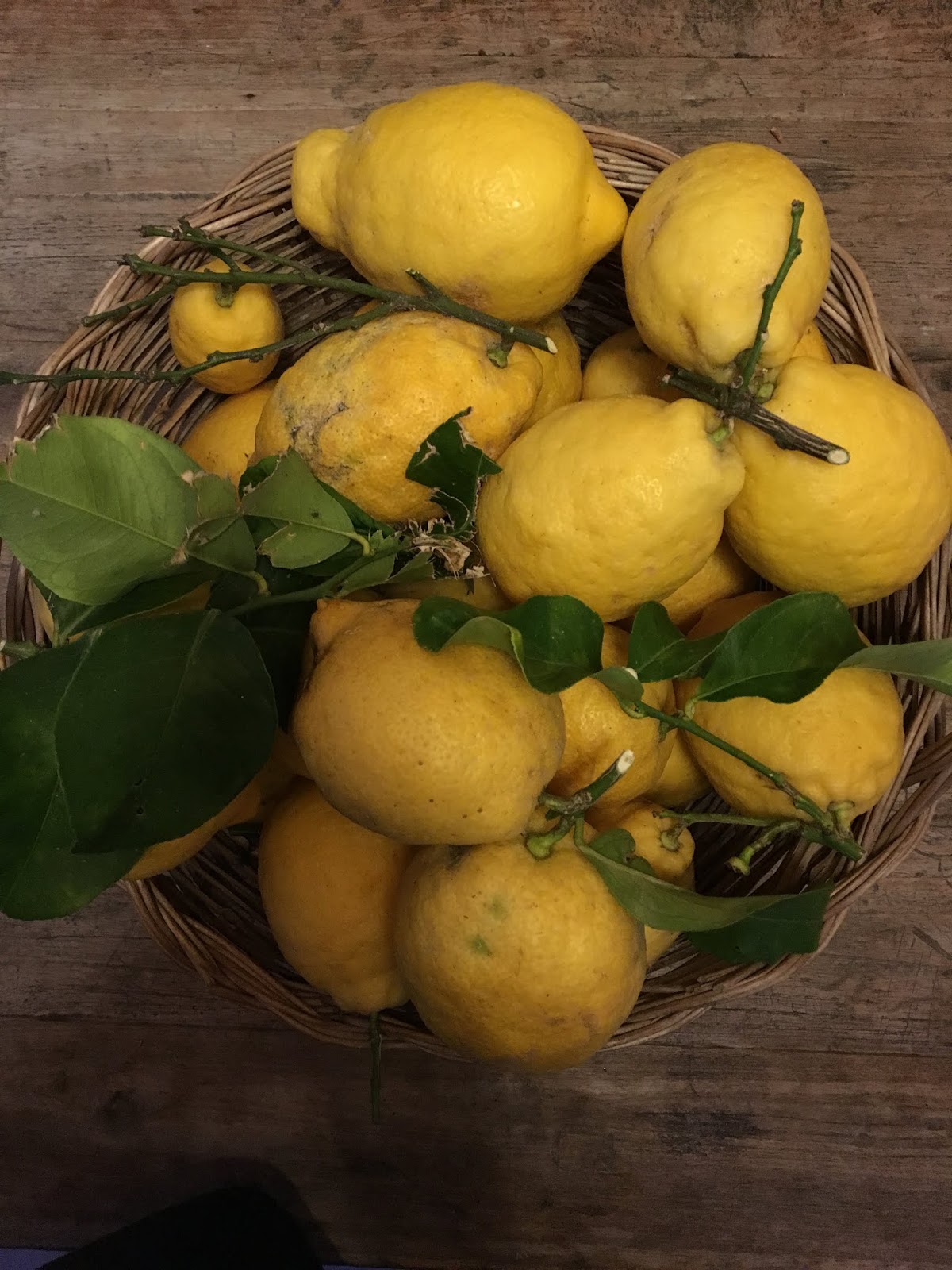
When Life Gives You Lemons
When life gives you lemons ... Make Limoncello!
During a recent visit to Naples, Italy, I visited a small, family run business making the vibrant yellow liquor. We were welcomed and given sample tasters of both the traditional and the milky Limoncella Crema.
The process was then explained (and can easily be replicated on a smaller version at home).
lemon skins + alcohol + sugar + boiling water (or milk for the cream version)
leave for a while (7 days or so)
strain, bottle and serve
Voila!
This delicious digestif served at the end of a meal is a bright end to the night
During a recent visit to Naples, Italy, I visited a small, family run business making the vibrant yellow liquor. We were welcomed and given sample tasters of both the traditional and the milky Limoncella Crema.
The process was then explained (and can easily be replicated on a smaller version at home).
lemon skins + alcohol + sugar + boiling water (or milk for the cream version)
leave for a while (7 days or so)
strain, bottle and serve
Voila!
This delicious digestif served at the end of a meal is a bright end to the night
Sunday, 5 May 2019
Planet Potential
This week marks the 93rd birthday of global treasure, broadcaster and natural historian, David Attenborough. He has brought wildlife and plant life to our screens for many decades and his most recent Netflix series, Our Planet, is both fascinating and frightening. When Sir stands in front of us and declares that we have only a matter of years left to protect and save our world, we had better pay attention.
Series producer Keith Scholey tells us that the next 20 years are critical and that it's not just about saving our wildlife, it's about saving ourselves.
At the same time Swedish schoolgirl Greta Thunberg has told MPs that her future has been "stolen" and has rallied other students to protest about climate change.
So, the elderly and the young seem to understand the need to act, and fast, but what about the middle ground? Extinction Rebellion, the climate change activists, have also increased public awareness with their peaceful protests in London.
So we have just had local elections in the UK and the results are a real shake-up for the two main parties, the Lib Dems being the biggest winners and the Green Party making progress. Brexit is probably the main culprit and the public honestly don't know which way to vote.
For those of us wanting to save the planet, we need clear leadership. We need someone at the helm to make recycling compulsory and consistent, someone to ban the production of non-recyclables, someone to give us clear rules to follow. If we are all singing from the same (bird)song sheet we can reduce our carbon footprint.
If you want to vote this week, try this, from Michael Pollan, author, journalist and activist;
"The wonderful thing about food is you get three votes a day.
Each one has the potential to change the world."
Series producer Keith Scholey tells us that the next 20 years are critical and that it's not just about saving our wildlife, it's about saving ourselves.
At the same time Swedish schoolgirl Greta Thunberg has told MPs that her future has been "stolen" and has rallied other students to protest about climate change.
So, the elderly and the young seem to understand the need to act, and fast, but what about the middle ground? Extinction Rebellion, the climate change activists, have also increased public awareness with their peaceful protests in London.
So we have just had local elections in the UK and the results are a real shake-up for the two main parties, the Lib Dems being the biggest winners and the Green Party making progress. Brexit is probably the main culprit and the public honestly don't know which way to vote.
For those of us wanting to save the planet, we need clear leadership. We need someone at the helm to make recycling compulsory and consistent, someone to ban the production of non-recyclables, someone to give us clear rules to follow. If we are all singing from the same (bird)song sheet we can reduce our carbon footprint.
If you want to vote this week, try this, from Michael Pollan, author, journalist and activist;
"The wonderful thing about food is you get three votes a day.
Each one has the potential to change the world."
Subscribe to:
Posts (Atom)